
Debunking the “Too Expensive” Myth
A lot of long-term backpackers and travelers skip Japan entirely for budgetary reasons, mistakenly dismissing it from their itineraries because they think it’s “too expensive.” I had long dreamed of visiting Japan during my numerous trips through Southeast Asia over the last 25 years, but the perceived cost always kept me from booking the ticket.
Let me set the record straight: while Japan is certainly one of the pricier destinations in Asia, it is not budget-breaking. It’s on par with traveling through New Zealand or Australia. Barbie and I completely fell in love with the place. We spent a full 10 days in Tokyo alone, and it easily ranks among the most interesting chapters of our round-the-world journey.
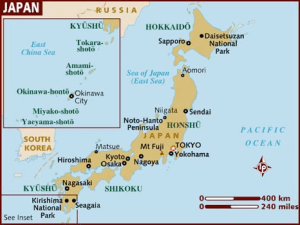
Now, we are getting ready to explore the outlying cities. To do it right, we secured a 21-day JR Rail Pass, which we activated the second we left Tokyo to squeeze out maximum value. This pass lets us zip around the country on the famed, high-speed Shinkansen bullet trains for an unlimited amount of segments without spending a fortune on transit.
Our preliminary targets outside of Tokyo include:
- Kyoto & Osaka
- Hiroshima & Miyajima Island
- Takayama & Kanazawa
- Nikko & Nara
If the time and weather permit, we are also planning to hunt down some of Japan’s southern beaches with potential stops at islands like Amami Oshima, Tokashiki, Ishigaki, and Miyako-jima.
Navigating the Underground Maze
I have to admit, prior to arriving in Tokyo, I was a bit frazzled by the mere thought of navigating this massive city by train—even with our extensive international experience using public transit. Taxis and Ubers here are incredibly expensive, so the rail system is your only real option.
The train stations are absolute mazes. The way I see it, Tokyo is actually two different cities: overground and underground. When you first look at the brain-numbing subway map, your head spins. But once you get the hang of it, navigating the system is a piece of cake.
And if you ever get slightly twisted, a local is always right there to assist you with a sincere, smiling face. In fact, locals will regularly go out of their way to personally walk you in the right direction.
Squeezed Like Courteous Sardines
We mostly managed to avoid the notorious rush-hour masses on the trains, but we did experience a few commutes where we were packed in like pure sardines. The crazy part is that the shoving is so polite and courteous that you can’t even get mad about it.
Honestly, you haven’t truly lived and breathed Tokyo until you’ve stuffed yourself onto a train car at the exact moment all 13 million residents are heading home for dinner. Just when you think it is physically impossible to squeeze one more human limb into the car, some guy inevitably sneaks in at the last second to obliterate any remaining pocket of breathing room. With that many warm bodies holding you up from all sides, falling asleep while standing up is completely possible. It was a real trip.


The Language Barrier and Total Silence
It is pretty bizarre that despite Japan being the most advanced nation in Asia, the local population speaks less English than any other country we’ve encountered on this journey—and that includes third-world spots in Southeast Asia like Cambodia, Vietnam, Thailand, and Laos.
But this communication gap didn’t bother us one bit. I simply do my little bow with a smile, the locals do their little bow with a smile, we throw in a few Arigatos, and nobody has to worry about who speaks what.
The Japanese are easily the most patient and quiet people I have ever encountered. There is an amazing sense of peace wherever you go. People are incredibly quiet on the streets, respectful in stores, and dead-silent on public transit—which is a refreshing change of pace given how crowded the metro gets. We are talking total, absolute silence. Nobody talks on their cell phones because it’s culturally taboo; I was even told it’s a law now that can carry a fine on the subways.
This environment makes Tokyo a goldmine for people-watching. The locals are incredibly fashion-forward, put-together, and smartly dressed. Even the street bums we saw—which I could count on one hand—were sharply dressed. One guy was literally styled like the Skipper from Gilligan’s Island.
The Golden Rule of the Queue & Cheap Sushi
The Japanese seemingly love to form queues. You will see them line up on the sidewalks in front of popular local food joints, waiting ever so patiently for a lengthy amount of time just to suck down a kick-ass bowl of ramen.
Now, I absolutely despise waiting in lines for food. But out here, I loved seeing the queues, because they served as our personal cue to get our impatient asses in line—it meant some seriously good shit was being served up.
Fortunately, there never seemed to be a line at the ubiquitous conveyor-belt sushi joints (kaitenzushi). I loved hitting these places up for a quick, premium snack. The cost of each plate (usually two pieces of sushi) varies by color, but most averaged out to about $1.50 to $2.00 USD per plate. That is a solid, unbeatable deal for some of the freshest sushi on the planet.
Childlike Spirit and Grown-Up Nightlife
The people here possess a remarkably youthful, childlike spirit, and there is a ton of innocent fun embedded in the culture. The TV game shows are wildly colorful, and watching adults retreat to neon karaoke rooms or boisterous Pachinko parlors to blow off steam after a long day at the office always made me smile.


But as reserved and shy as the Japanese can appear, they definitely appreciate their adult fun. Shinjuku houses its own famous red-light district, but unlike seedy districts spanning the rest of the world, this one is clean, safe, and blends right into the regular nightlife scene.
We didn’t notice any standard strip clubs, but the area is packed with neon-lit spots geared toward mingling. We walked by a few of these hostess clubs just to observe, though we couldn’t quite get a handle on the exact deal inside since we never entered. From what we gathered, they are places where men pay for women to keep them company over drinks and conversation, without any actual hanky-panky.
For nightlife, Golden Gai is an absolute must-visit nightlife scene. It features more than 250 tiny, ramshackle drinking dens crammed into a tight grid of narrow alleys. Wandering around those historic streets at nighttime is pure magic.
Akihabara:
While walking around the electronics district of Akihabara, we passed dozens of themed cafes. The Maid Cafes are easily the most intriguing looking—places where you can hang out with cute young girls dressed in elaborate, sexy French maid outfits while you sip your coffee (and no, they are definitely not there to clean houses).
We also decided to check out the world’s largest Japanese adult department store, a place called M’s Pop Life. This place soars eight floors upward into the sky and is famous for its massive collection of costumes, novelty toys, realistic blow-up dolls, and endless rows of adult movies. They had some incredibly strange, surreal adult films playing on monitors right next to the retail displays, which honestly kind of freaked us out.
You might think Americans have a monopoly on being freaky, but the Japanese take it to an entirely different level. On a related note, I also couldn’t help but notice that they have absolutely mastered the art of cosmetic enhancement out here. I have never seen boob jobs look so incredibly realistic and natural.
High-Tech Toilets: Taking Care of Business
Aside from their unique take on adult entertainment, the other absolute marvel of Japanese engineering is their electronic toilets. Who would have thought that taking a dump could be such an advanced, luxury experience?
These are no ordinary American porcelain bowls. When you step into a private toilet stall, the lid automatically raises the moment the door opens. The toilet comes equipped with an attached electronic control panel featuring a massive shitload of buttons designed to maximize your comfort.
Here is the official breakdown of the dashboard features:
- Butt Wash: A precise stream with completely adjustable water temperatures.
- Heated Seat: Delivers a cozy, warming sensation to your tushie. Barbie was a massive fan of this one.
- Warm Air Dry: Functions essentially like a miniature hair dryer for your behind.
- Air Conditioning: Directs a cool, refreshing breeze down at your bottom on warm, sweaty days.
- Cleansing Spray: Offers various pressure controls for taking care of particularly nasty situations.
- Deodorizer: Instantly rids the stall of any unwanted stank.
- The Noisemaker: Emits a steady stream of white noise (or sometimes classical music) to drown out the inevitable big splash sound. It’s a genius privacy feature. I’m still waiting for a machine that plays Queen’s “Another One Bites the Dust,” but no luck so far.
- The Turbo Wash: For the big dudes who really know how to take care of business, this high-powered blast shoots a turbo-stream of water to handle the situation. These high-tech thrones are the ultimate weapon against loose stools.


Sidewalk Bicycles and Non-Existent Traffic
Considering the sheer volume of humanity packed into this city, you would assume the streets would be total chaos. But it is the exact opposite. Everything is meticulously organized, and people move at a relaxed pace.
I was shocked to discover locals cycling with total ease not just on the roads, but right on the crowded sidewalks alongside pedestrians. Just try doing that on the sidewalks of New York City. Forget about it. You’ll either get cussed out instantly or flattened by a straight-arm from a high-strung, uptight Manhattanite. In Tokyo, people are just naturally considerate of one another.
I’m not entirely sure if there are strict automobile restrictions in place inside the metropolitan core, but car traffic was virtually non-existent during our stay. Crossing the streets and wandering the avenues was an absolute pleasure. Japan is so deeply rooted in mutual respect that it’s impossible not to respect it right back.
Mapping the Metropolis: The Neighborhood Cheat Sheet
Tokyo can be incredibly intimidating for first-time visitors because it is a massive, sprawling urban maze. The trick is to stop thinking of it as one giant city, and start viewing it as a collection of distinct neighborhoods, each boasting its own unique personality. Conveniently, most of them are connected along a single loop by the famous JR Yamanote Line.
Instead of restricting ourselves to one spot, we split our first 10 days between the action-packed hub of Shinjuku and the bohemian lanes of Shimokitazawa. When we return to Tokyo after touring the rest of the country, we plan to base ourselves in Shibuya and Ebisu for another week.
Shinjuku gave us all the neon nightlife and endless food courts we could handle, but Shimokitazawa stole our hearts. It is one of the coolest neighborhoods. Its low-rise, narrow streets, vintage shops, indie cafes, and laid-back bohemian atmosphere just ooze local charm. It is an absolute must-visit.
The real secret to tackling Tokyo is simple: do not over-plan. Just pick a few anchor spots, start walking, and let the city surprise you. If you don’t have a full two weeks to explore like we do, keep it simple and focus on just a couple of sections that match your vibe.
Here is your quick-reference neighborhood guide:
- Shibuya: The Times Square of Tokyo. Home to cool hidden alleys, youthful fashion, and the iconic Shibuya Crossing.
- Shinjuku: Neon lights, Golden Gai nightlife, Piss Alley, and the cinematic backdrop for Lost in Translation.
- Shimokitazawa: A unique bohemian paradise packed with small vintage shops, indie cafes, and local street musicians.
- Harajuku: The wacky teenage fashion subcultures along Takeshita Street on Sundays, anchored by the massive green escape of Yoyogi Park.
- Omotesando: A highly fashionable, architectural shopping boulevard widely considered Tokyo’s version of the Champs-Élysées.
- Ginza: High-end luxury shopping and the gateway to the incredible seafood stalls of the Tsukiji Outer Market.
- Asakusa: A taste of old-school Tokyo, featuring the historic Senso-ji Temple and the bustling Nakamise-dori shopping street.
- Akihabara: The undisputed capital of gaming arcades, anime culture, gadget shops, themed cafes, and adult mega-stores.
- Koenji: A laid-back local neighborhood famous for its deep collection of shrines, hip izakayas, and an underground indie music scene.
- Ueno: Home to the sprawling Uenoonshi Park and the lively, chaotic stalls of the Ameya Yokocho Market.
- Roppongi: Known almost exclusively for its heavy international nightlife and massive dance clubs.


Thru the Binocs: Why Japan is My Kind of Place
After 10 days on the ground, I can safely say Japan is entirely my kind of destination. Here is why:
- Slurping is Encouraged: Making loud noises while eating your noodles is completely OK! In fact, slurping hot ramen is considered polite because it shows the chef you are genuinely enjoying the meal. I can’t get away with that noise anywhere else in the world without Barbie getting all over my ass, but she was safely hushed by local protocol out here.
- No Tipping Allowed: There is absolutely zero tipping in Japan under any circumstance—not for cabs, restaurants, or personal care. To try and tip someone is actually considered a minor insult. Regular readers know Big Doug hates tipping, so this is pure paradise.
- Flawless Hygiene: The baseline standards for cleanliness and hygiene are incredibly high across the board. You can walk into literally any hole-in-the-wall joint and feel 100% confident eating the food. No loose stools on my watch.
- Military Punctuality: The Japanese are impressively punctual. A local told me that if you accumulate all the delays across all the bullet trains over the course of an entire year, the average delay is only 30 seconds! I love visiting places where people actually have their shit together.
The Japanese always appear to be smiling, and honestly, they have a lot to smile about because everything out here simply works.
We are officially jumping on the Shinkansen to start our tour of the outlying regions


I love your posts – I’m living vicariously through them. So glad you had the opportunity to do this.
Love you both
LikeLike
So you’ve found your Nirvana in Tokyo! My favorite description was of the amazing toilets and the extensive menu for butt enhancement and odor abatement. I didn’t see any seat liners and wonder about the hygiene piece of using those toilets. I am also amazed that the Japanese are polite and friendly, and genuinely happy smiling people. I always thought the politeness was a ruse, the bowing was disingenuous, and that it was not a genuine expression. I figured there was a sinister sentiment lurking just beneath that surface. What a surprise! Oh how I would love to be surrounded by complete silence on a train or any other public venue. For that feature, alone I would be happy living there. As most ignorant people of the outer world, I believed the Japanese ate a majority of raw fish — the sushi rage in the U.S. seems to be a status symbol. If I eat anything that was once alive, it must be cooked — absent: rodents, Chordata Reptilia and invertebrate arthropods! Another enlightening item was the fact that the Japanese eat lots of cooked food; your video showed grilled, skewered meats, hot soup with rice, and you mentioned ramen noodles. Is it true the Japanese residences don’t have stoves/ovens — just microwaves? Or am I the victim of just so much stereotyping?? The sex industry and its expansive real estate presence wasn’t so much of a shock as seeming not to belong to such gentile and polite humans. Of course, sex is the energy that propels mankind! Once again, thank you for another enlightening and humorous rendition of your travels. I do so enjoy your writings. Hopefully, you will publish some travel booklets upon your return to “complacency”. Safe travels until we meet again. Love you, Tina
LikeLike